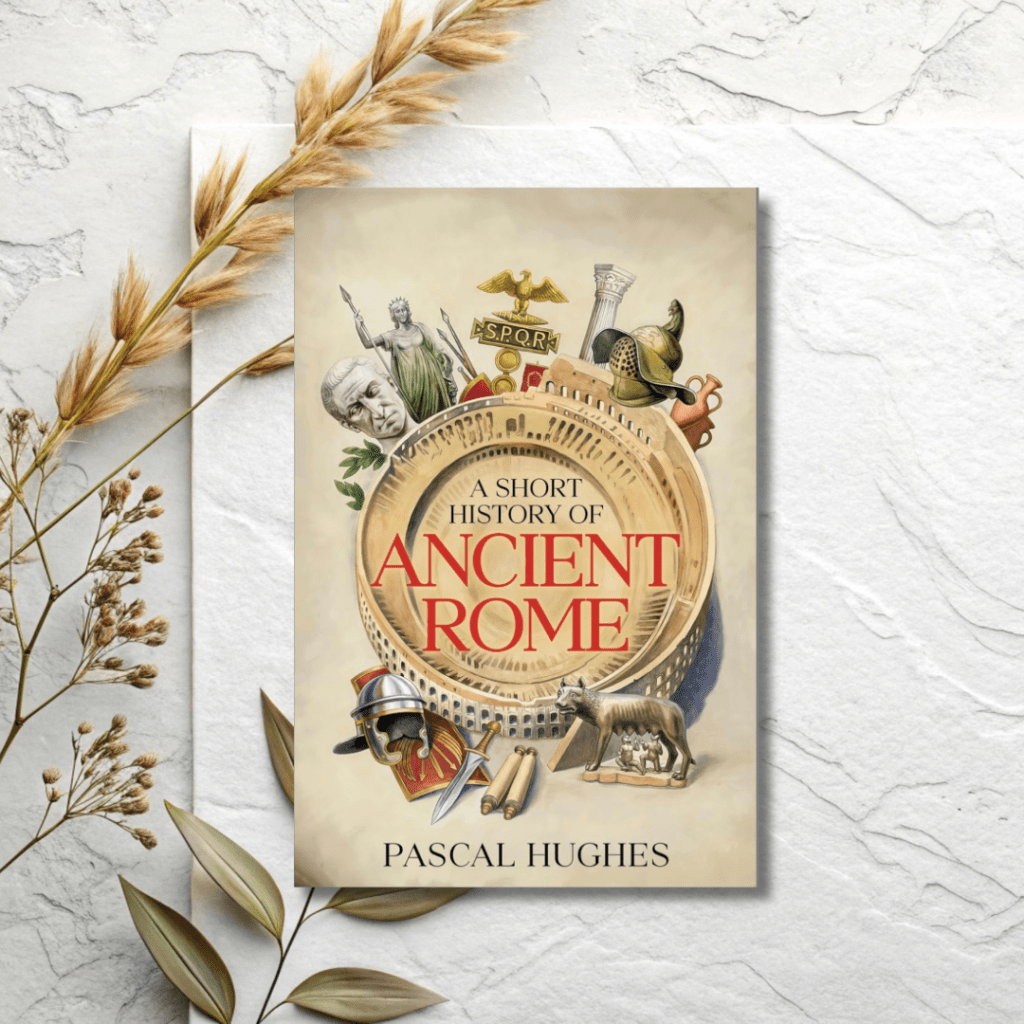
Book Review: A Short History of Ancient Rome by Pascal Hughes

โญ๏ธ โญ๏ธ โญ๏ธ โญ๏ธ โญ๏ธ/5

This site contains affiliate links to products. I may receive a commission for purchases made through these links at no additional cost to you.

If youโ€™re a fan of the Short History Ofโ€ฆ podcast from Noiser, youโ€™re probably going to enjoy this book quite a bit. Full disclosure right up front: there is a fair amount of crossover between the podcast and the book, particularly in tone and some of the stories. If youโ€™re a longtime listener, some moments will feel familiar, but it never felt repetitive in a way that bothered me. Instead, it felt like a more complete, more polished version of something I already enjoyed.

What Hughes manages to do here is no small thing. While Edward Gibbonโ€™s The Decline and Fall of the Roman Empire famously stretches into the thousands of pages depending on the edition, Hughes distills roughly 1,000 years of Roman history โ€” from its legendary beginnings to the fall of the Western Empire โ€” into about 350 pages across 18 chapters. That kind of compression could easily feel rushed or shallow, but this book never does.

The writing is clear, confident, and very readable. Hughes blends solid historical research with anecdotal, narrative storytelling that keeps things moving without sacrificing substance. Iโ€™m a big fan of narrative history, and this book strikes a nice balance: itโ€™s informative without being dense, and engaging without feeling like itโ€™s oversimplifying the material. You can tell itโ€™s written for curious readers, not academics, but it still respects the history.

Readers get the full sweep of Romeโ€™s story, starting with the mythical founding of the city through Romulus and Remus, moving through the Republic, and into the drama, ambition, and excess of the Imperial period. Along the way, Hughes highlights familiar figures and moments โ€” Hannibal crossing the Alps, Julius Caesarโ€™s rise and fall, and all the intrigue surrounding Cleopatra โ€” grounding big historical shifts in human stories. Even if Roman history isnโ€™t something youโ€™ve studied deeply, youโ€™ll recognize plenty here and never feel lost.

One of the bookโ€™s biggest strengths is that it avoids feeling like a textbook. This isnโ€™t one of those history books you were forced to read in school and promptly forgot. The pacing is strong, the chapters are manageable, and the storytelling keeps you engaged even when covering complex political or social changes. Itโ€™s the kind of history book that makes you want to keep reading rather than checking how many pages are left in the chapter.

I also listened to the audiobook version, which I highly recommend. The narration leans into the storytelling aspect, making it feel less like a lecture and more like someone walking you through the story of Rome. For a book like this โ€” broad in scope but focused on narrative โ€” the audio format works especially well.

Overall, A Short History of Ancient Rome is an accessible, engaging introduction to one of the most influential civilizations in history. Itโ€™s a great choice for readers who enjoy history told as a story, and especially for fans of the Short History Ofโ€ฆ podcast who want a deeper, more sustained dive into ancient Rome.

Thank you so much to the author, Pascal Hughes, Netgalley and Harlequin Trade Publishing | Hanover Square Press for the ARC copy of this book.

A Short History of Ancient Rome by Pascal Hughes is out now! You can grab your copy here.

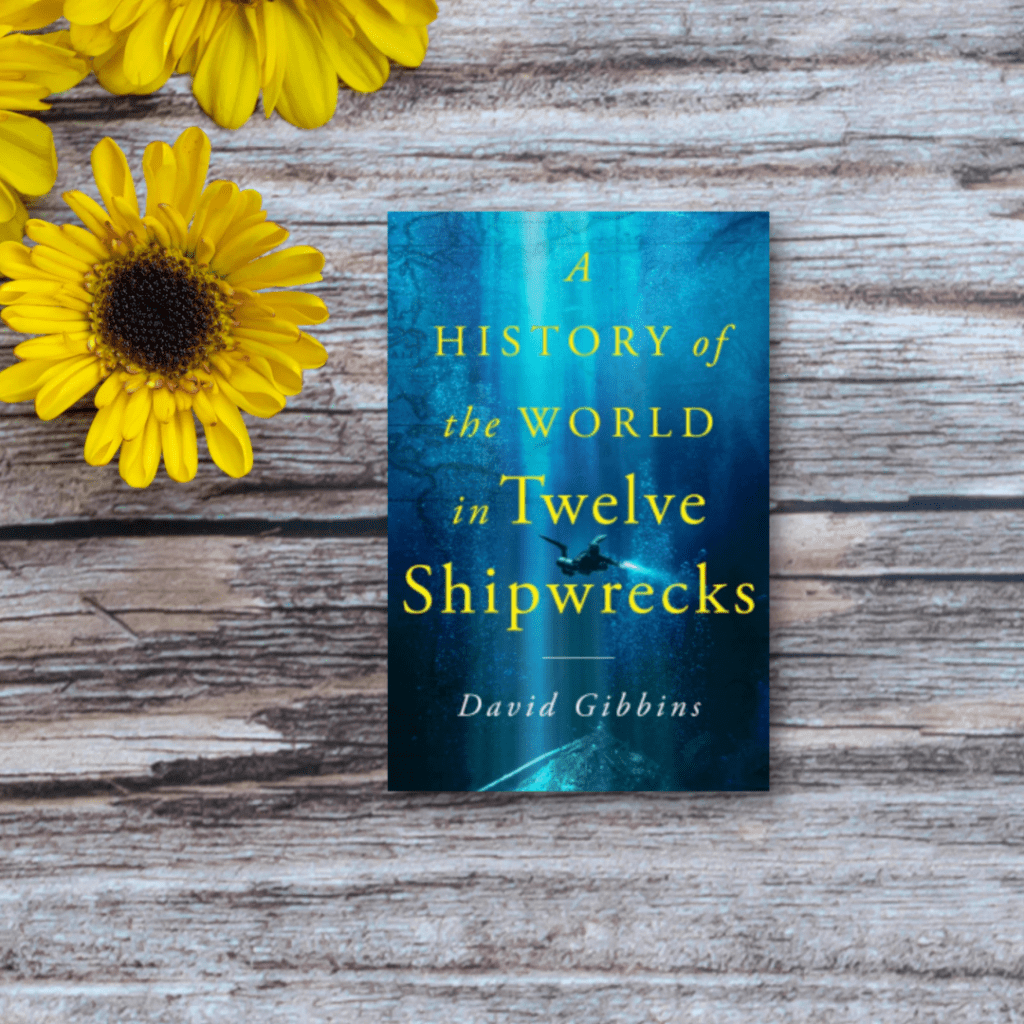
A History of the World in Twelve Shipwrecks by David Gibbins

โญ๏ธ โญ๏ธ โญ๏ธ โญ๏ธ โญ๏ธ/5

This site contains affiliate links to products. I may receive a commission for purchases made through these links

Okay, I was not expecting to be this obsessed with a book about shipwrecks, but here we are. David Gibbins absolutely nailed it with A History of the World in Twelve Shipwrecks. Itโ€™s like National Treasure met Master and Commander and had a book babyโ€”with Gibbins playing the role of the charming professor who also happens to scuba dive in his spare time. (Yes, he really dove to some of these wrecks himself. The man is basically Indiana Jones in a wetsuit.)

Each chapter takes a shipwreck and uses it as a portal into world historyโ€”Bronze Age trade, Viking raids, the freakinโ€™ Industrial Revolution, and even Nazi U-boats. And it should be dry, right? Like, this book has no business being this good. Itโ€™s fact-dense, loaded with historical details, and somehow still manages to be unputdownable.

What I really loved is how personal it felt. Gibbins doesnโ€™t just list dates and sunken hullsโ€”he brings us along for the dive. You feel the chill of the water, the adrenaline of discovery, and the thrill of connecting a rusted sword or a hull full of brass pins back to the rise and fall of civilizations.

So if youโ€™re into history, adventure, archaeology, or just want to read something that makes you smarter and cooler at dinner parties, this book is your new favorite.

On sale now, you can get your copy here.

Thank you to the author David Gibbins, the publisher St. Martin’s Press and NetGalley for the ARC copy of this book!

As always, I encourage you to read this one for yourself and formulate your own opinion.

Good Game, No Rematch by Mike Drucker

โญ๏ธ โญ๏ธ โญ๏ธ โญ๏ธ โญ๏ธ/5

This site contains affiliate links to products. I may receive a commission for purchases made through these links

As an older millennial, I vividly remember receiving my first Nintendo NES system. What I didnโ€™t realize at the time was that my parents were secretly taking the consoleโ€”and Super Mario Bros.โ€”out every night to play, then hiding it back in the closet until Christmas morning.

My mother jokingly calls herself an vid-diot and loves games of all kinds. Card games, board games, video games, sheโ€™s down to play. She was the kind of mom who, if you said, โ€œHey Mom, Iโ€™m on level eight. Iโ€™m almost at Bowserโ€™s castle. I have 99 lives and a full inventoryโ€”can you please leave the TV on for me?โ€โ€”there was a 50/50 chance that youโ€™d either wake up to find sheโ€™d beaten the game, or that the TV was still on, patiently waiting for you to finish.
If you asked my dad the same thing, heโ€™d likely get confused and accidentally turn the TV off. It was never maliciousโ€”he just never really got video games the way my mom did.

Good Game, No Rematch is both a history of video games and a subtle, hilarious biography of every awkward millennial adult trying to navigate modern life. One of my favorite quotes from the book is: โ€œTry being a people-pleaser who doesnโ€™t understand how to peopleโ€โ€”a line that perfectly encapsulates my life.
The book traces the evolution of video games from the perspective of the millennial generation, for whom the NES was a defining piece of childhood. Many books on video game history attempt to cram too much into one volume. While that can be ambitious, it often makes the narrative overwhelming or dry. This book smartly narrows its focus, making the material engaging and accessible throughout.

Before reading this, I didnโ€™t know much about Mike Drucker. Iโ€™m not a huge TV person, so I hadnโ€™t connected his name to the well-known shows heโ€™s written for. But now, Iโ€™m off to explore his body of work. His writing is sharp, witty, and genuinely funnyโ€”it makes you feel like you want to hang out with him. (Well, sort ofโ€”Iโ€™m kind of agoraphobic and not particularly fond of leaving the house.)

In any case, if you grew up playing video games, love reading, and find comfort in shared nostalgiaโ€”or youโ€™re just trying to survive adulthood as an elder millennialโ€”this book is absolutely for you.

On sale now, you can get your copy here.

Thank you to the author Mike Drucker, the publisher Harlequin Trade Publishing | Hanover Square Press and NetGalley for the ARC copy of this book!

P.S.- if you’re an audiobook girlie like me, this one is author narrated and excellent!!

As always, I encourage you to read this one for yourself and formulate your own opinion.
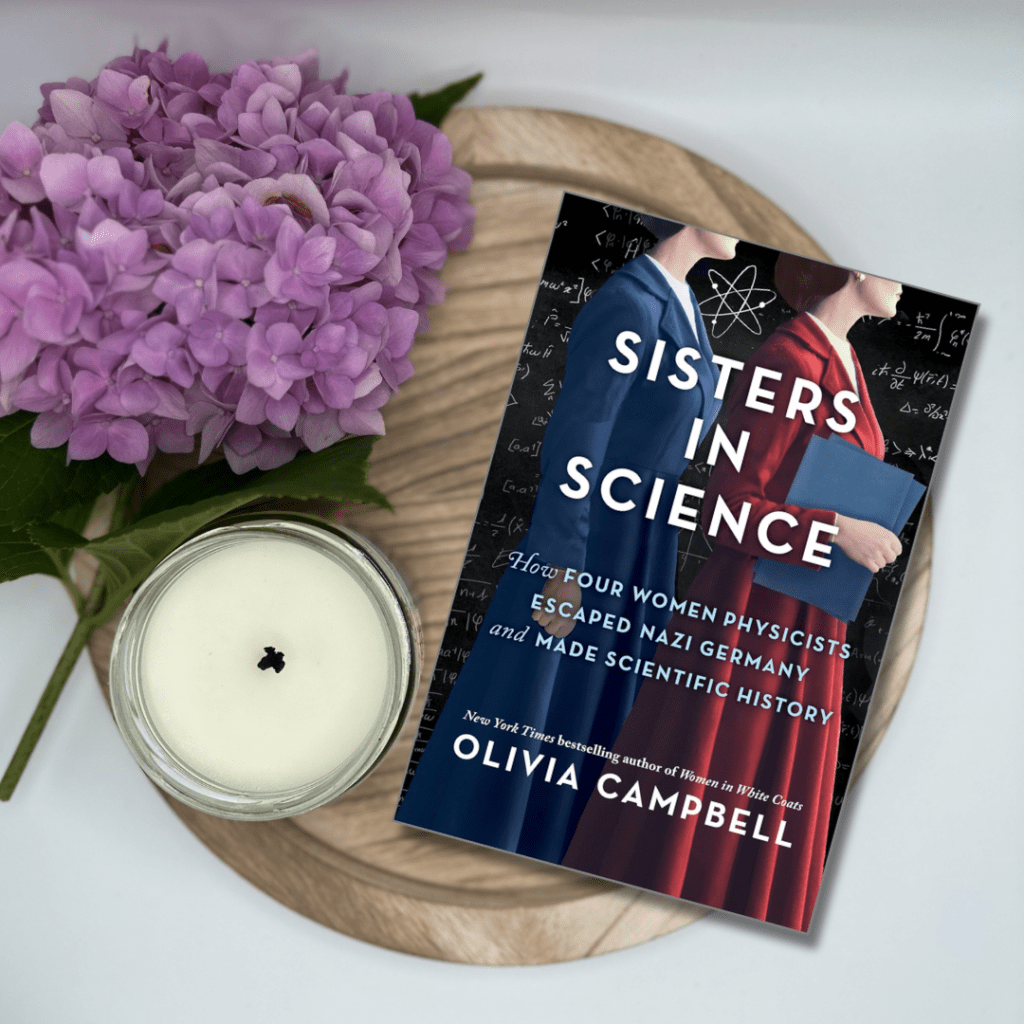
Book Review: Sisters in Science by Olivia Campbell

โญ๏ธ โญ๏ธ โญ๏ธ โญ๏ธ โญ๏ธ/5

This site contains affiliate links to products. I may receive a commission for purchases made through these links

Sisters in Science is an extraordinary narrative that sheds light on the lives of four remarkable womenโ€”Hedwig Kohn, Lise Meitner, Hertha Sponer, and Hildegard Stรผcklenโ€”who defied the oppressive forces of Nazi Germany to leave a lasting impact on the world of science. Olivia Campbell offers a deeply researched and compelling account of their experiences, blending historical detail with a keen sense of storytelling.

This book takes readers into the tumultuous period of World War II, a time when the Nazi regime systematically persecuted individuals based on their religion, ethnicity, and political ideologies. For these four womenโ€”brilliant physicists and chemistsโ€”the stakes were particularly high. They faced not only the danger of persecution but also the erasure of their scientific contributions in a field dominated by men.

โ€ข Hedwig Kohn found refuge in Sweden, where she was able to continue her work in physics despite the challenges of exile.

โ€ข Lise Meitner, co-discoverer of nuclear fission, fled to Sweden and then to the United States, where her groundbreaking research would lay the foundation for future discoveries in atomic science.

โ€ข Hertha Sponer made her way to the United States and became one of the first female professors at Duke University, where her contributions to molecular physics broke barriers for women in academia.

โ€ข Hildegard Stรผcklen, though less known, played a vital role in advancing the fields of physical chemistry and spectroscopy during her exile.

What makes Sisters in Science truly stand out is its balance between detailed historical context and personal stories. Campbell doesnโ€™t just focus on the challenges these women faced; she also celebrates their triumphs and enduring legacies. Their exile wasnโ€™t just a flight for survivalโ€”it was a testament to their resilience and dedication to their work.

The bookโ€™s pacing is excellent, weaving historical events with the personal journeys of each scientist. Olivia Campbellโ€™s meticulous research is evident in every chapter, but she manages to avoid making the narrative feel heavy or overly academic. Instead, readers are invited to feel the urgency, despair, hope, and triumph these women experienced as they rebuilt their lives and careers in foreign lands.

What resonates most is the sheer humanity of their stories. These women were not just scientists; they were pioneers who refused to let an oppressive regime dictate their destinies. Their determination to pursue truth and knowledge, even in the face of unimaginable odds, is deeply inspiring.

Campbell also brings attention to an important issue: the lack of recognition for womenโ€™s contributions in science. While these four women achieved remarkable feats, their names are often overshadowed by their male contemporaries. This book is a much-needed acknowledgment of their place in history and a reminder of how far weโ€™ve comeโ€”and how far we still have to goโ€”in achieving gender equality in STEM fields.

The writing is accessible yet rich in detail, making Sisters in Science an ideal read for both casual readers and those with a deep interest in history, science, or womenโ€™s studies. The inclusion of photographs, letters, and archival material adds another layer of authenticity and depth, helping readers connect with the women on a more personal level.

I cannot recommend Sisters in Science highly enough. It is a powerful and inspiring reminder of the strength of the human spirit and the vital role of women in shaping our understanding of the world. Whether youโ€™re a history enthusiast, a science lover, or someone simply looking for an inspiring read, this book will leave you enriched and in awe of the incredible resilience and brilliance of these women.

A special thank you to Olivia Campbell, NetGalley, and Harlequin Trade Publishing for the opportunity to read this incredible book. Itโ€™s a work that will stay with me for a long time.

On sale now, you can get your copy here.

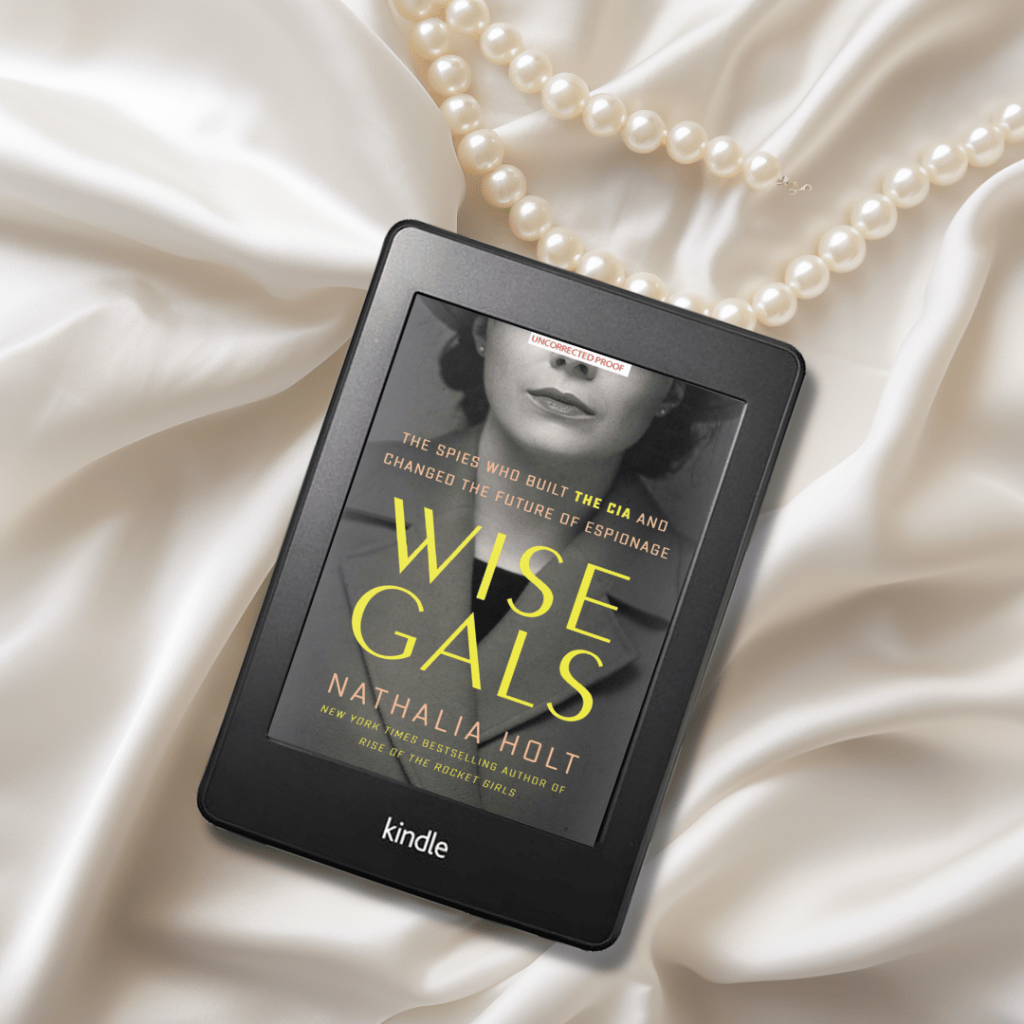
Wise Gals By Nathalia Holt

โญ๏ธ โญ๏ธ โญ๏ธ โญ๏ธ โญ๏ธ/5

This site contains affiliate links to products. I may receive a commission for purchases made through these links

Nathalia Holt, a New York Times bestselling author renowned for uncovering untold stories, delivers another gem with Wise Gals: The Spies Who Built the CIA and Changed the Future of Espionage. Diving into the hidden history of the CIA’s early days, the book introduces readers to four extraordinary womenโ€”Adelaide Hawkins, Mary Hutchison, Eloise Page, and Elizabeth Sudmeierโ€”who defied societal norms to play pivotal roles in the Agency’s formation and operations.

These aren’t your average femme fatales from spy novels or the stereotypical honey traps that normally come to mind when you think about female spies. No, these women are intellectual powerhouses with nerves of steel. Their remarkable stories span from World War II through the Cold War era, touching on ongoing international crises. In what was described as a “male, pale, and Yale” dominated workspace, Adelaide’s cryptographic genius, Mary’s diplomatic skills, Elizabeth’s daring field intelligence, and Eloise’s groundbreaking scientific contributions all shine through.

What sets this book apart is Holt’s meticulous research, evident on every page. Drawing from first-hand interviews and declassified documents, Holt doesn’t give readers a James Bond-esque narrative but instead offers a grounded account of these women’s determination and significant contributions. This includes crucial roles in predicting the Soviet Union’s early development of atomic capabilities and intelligence gathering that contributed to the Cuban missile crisis.

However, the book doesn’t shy away from the grim realities these extraordinary women faced, particularly their battles for equal pay and recognition in a notoriously misogynistic environment. A poignant example is Jane Burrell, another key figure who has yet to receive a star on the CIA’s Memorial Wallโ€”an oversight that Holt brings into focus.

Wise Gals serves as a significant addition to both historical non-fiction and discussions about the challenges and triumphs of women in the workforce. Reading it leaves you with a complicated mix of pride for these women’s achievements and frustration at the societal barriers they had to fight. Itโ€™s a fight many continue to this day. While the book may not offer high-octane thrills, it provides a long-overdue homage to these unsung heroines of American history. Whether you’re interested in untold stories of women instrumental to our country’s security or simply a well-crafted narrative, this book is an excellent read.

A huge thank you to the author Nathalia Holt not only for an advanced copy of this book, but for shedding light on these crucial but long-overlooked narratives. And thank you to the publisher Penguin and NetGalley for the ARC copy of this book.

As always, I encourage you to read this one for yourself and formulate your own opinion.
On sale now, you can get your copy by clicking Here

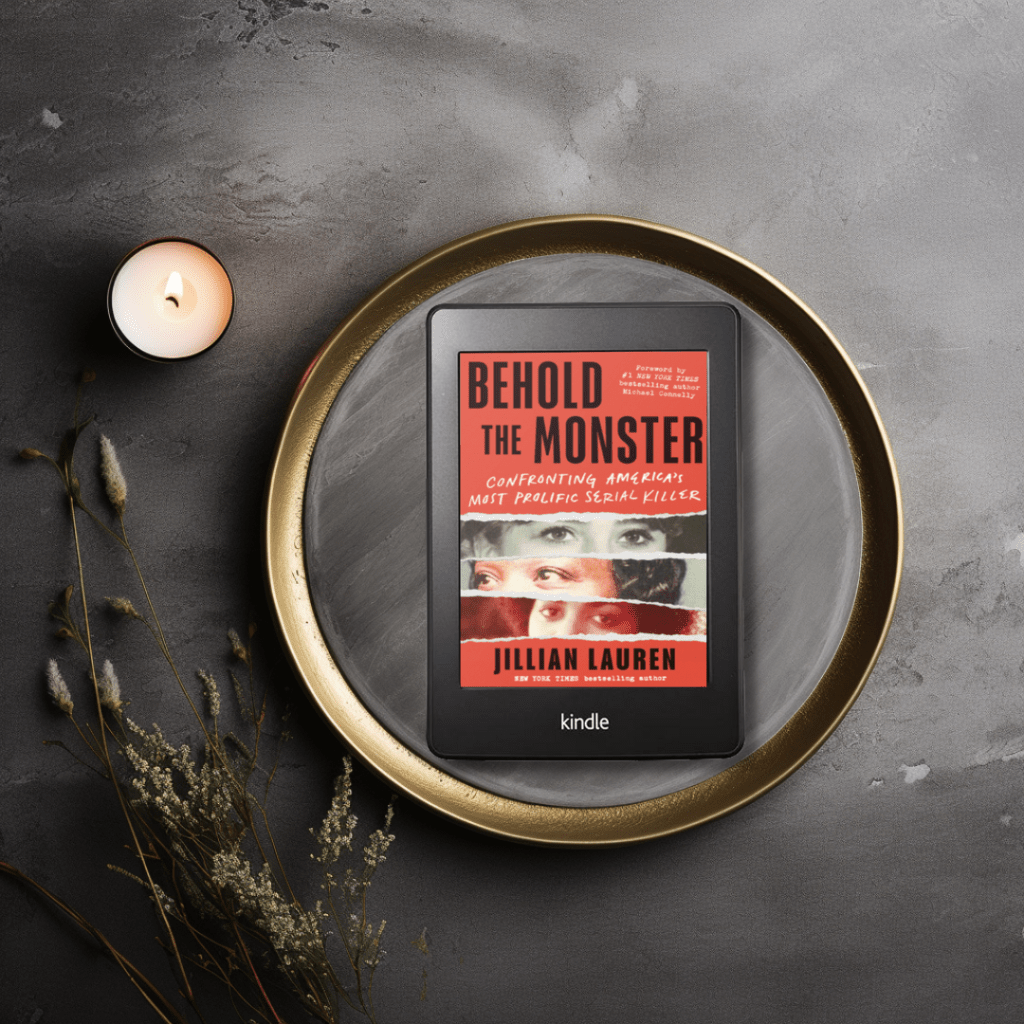
Behold The Monster By Jillian Lauren

โญ๏ธ โญ๏ธ โญ๏ธ/5 (3.5)

This site contains affiliate links to products. I may receive a commission for purchases made through these links

“Behold the Monster” by Jillian Lauren is a chilling and comprehensive account of the life of Samuel Little, touted as the most prolific serial killer in history. As an avid reader of true crime literature and a regular listener of true crime podcasts, I was taken aback by my unfamiliarity with Sam Hill, a testament to Lauren’s extensive research and deft storytelling.

Lauren skillfully weaves together various narratives, including her conversations with Sam Hill during his incarceration, trial transcripts, and deeply emotional interviews with the victims’ family members. These diverse narrative threads form a haunting tapestry that offers readers a glimpse into the lives of Little’s victims and their tragic last moments.

“Behold the Monster” delves into disturbing territories as it unfurls the life of Sam Little. From his shocking birth and unsettling upbringing to his harrowing reunion with his biological mother, every aspect of his life seems steeped in horror. These unnerving details might make the book a difficult read for some. For me, it was an overwhelming journey through the macabre details of his heinous acts.

The strength of the book lies in its empathetic storytelling. Lauren gives voices to the victims, interviewing their family members to ensure that their memories endure. It’s heartening to witness the resilience of the four women who escaped Little’s clutches, their stories forming a ray of hope in this dark narrative.

I hardly ever put trigger warnings on my reviews especially true crime books. More than likely if youโ€™re reading a true crime book, you know that youโ€™re going to read some messed up stuff. However, readers should be forewarned that the book contains graphic descriptions that might trigger sensitivities. From violence to deep-seated trauma, if there’s a potential trigger, it’s likely present in this book. Despite its disturbing content, the book is informative, engaging, and at times it is as difficult to put down as it is to read.

In comparison to other true crime books like “I’ll Be Gone in the Dark” which detail the exhaustive hunt for the criminal, “Behold the Monster” might come off as excessive in its detailing of Little’s gruesome crimes. Personally, I would have appreciated more insight into the trial proceedings and the evidentiary process.

Jillian Lauren’s “Behold the Monster” is a definitive account of Samuel Little’s life, making it a must-read for true crime aficionados. However, its graphic content makes it a tough read at times. I’d give it a 3.5 out of 5. I was hoping for more courtroom drama and investigative details and less graphic depiction of his horrific deeds.

For those interested in the history, mystery, and thriller genres or in historical biographies and memoirs, this book is a crucial addition to the true crime non-fiction landscape. But proceed with caution: this book pulls no punches when it comes to the brutal reality of Samuel Little’s crimes.

As always, I encourage you to read this book and form your own opinions and thoughts as I have mine.

One sale now, you can grab your copy here.

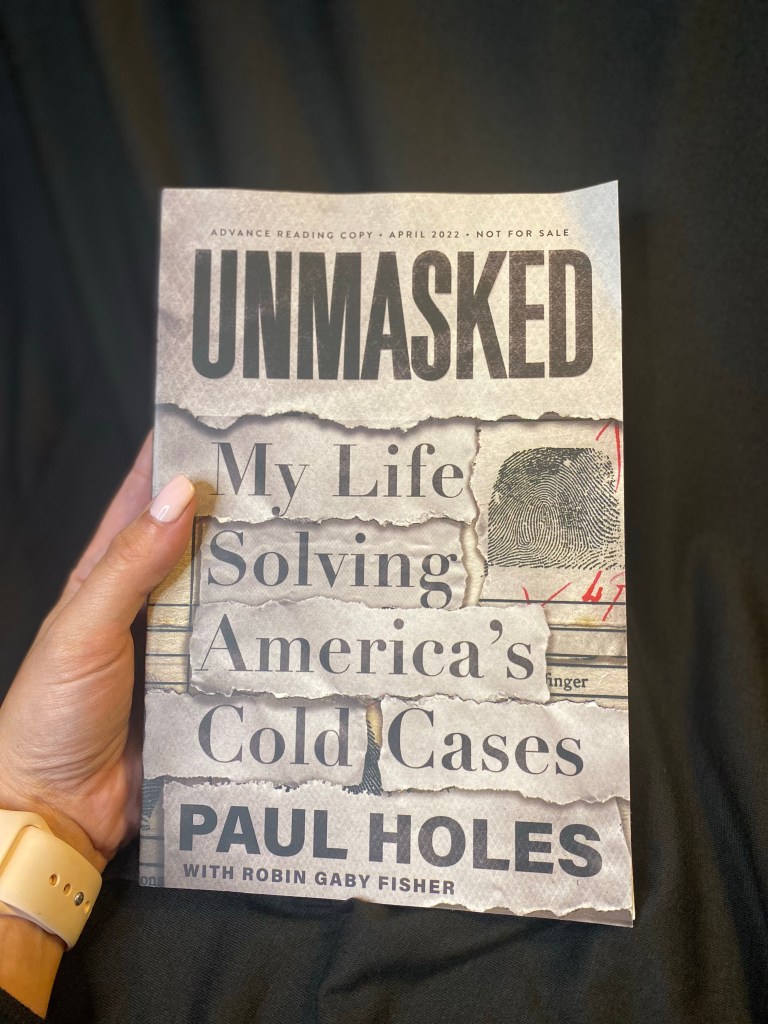
๐”๐ง๐ฆ๐š๐ฌ๐ค๐ž๐: ๐๐ฒ ๐๐š๐ฎ๐ฅ ๐‡๐จ๐ฅ๐ž๐ฌ

โญ๏ธโญ๏ธโญ๏ธโญ๏ธโญ๏ธ/5

I had to take a break from some of the romance Iโ€™ve been reading lately, and I donโ€™t think that there is anything less romantic than some true crime.

We first meet Paul Holes in Iโ€™ll Be Gone In the Dark, the CSI who became as obsessed with GSK as Michelle did. (Iโ€™m actually re-reading this now, I should have done it before I picked up Unmasked.) Paul takes us through his life, how his career ruined his marriage, finding new love, and what is was like to tackle some of the most notorious cold cases weโ€™ve ever seen.

It was extremely interesting to see the evolution of genetic and DNA testing as used for investigation. I wish there was more on some of his most memorable cases (there was a lot about GSK, maybe because it was his longest running cold case), but the book was full of information.

Be warned, this isnโ€™t for the faint of heart or those who arenโ€™t accustomed to reading True Crime. Holes doesnโ€™t pull any punches with his descriptions.

Thank you so much to the author and @celadon for the ARC copy of this book.

Darynda Jones: A Bad Day For Sunshine

Please note that this post may contain affiliate links, which are no cost to you but do give me a small payout if you choose to purchase via the link on the page.

Rating: 5 out of 5.

The Rundown: Sunshine Vicram is duped by her meddling parents into becoming the sheriff of her small hometown. Her first day on the job is a doozy and leads to revelations about her abduction 15 years ago.

Written by Darynda Jones, Published April 2020

Oh my gawd, stop what you’re reading right this minute, and go order this book. I’m not kidding. So Oh my gawd, stop what you’re reading right this minute, and go order this book. I’m not kidding. So I’ve had Darynda Jones’ other series on my tbr list for, well, forever. Then I got an ARC copy of the 2nd book in her new series, so of course, I had to go back and read the first one before I read that one. Did that make sense? I hope so.

Anyway, if you’re a fan of Stephanie Plum, you’re going to poop your pants over Sunshine Blaze Vicram. Sunshine and her daughter Auri have just moved back to Sun’s hometown of Del Sol, New Mexico after her parent’s somehow managed to get her elected as the new town Sheriff. Even though she left Del Sol in the rearview mirror years ago. Lucky for her, her best friend Quincy is a Sheriff’s Deputy, so it’s old friends back together again.

Her first day on the job brings a missing teenager who has been predicting her death and abduction since she was six. Sybil St. Aubin had made friends with Sunshine’s daughter, Auri, that summer at the lake, and has left behind a series of clues that don’t seem to add up.
The day also brings Little Miss Sunshine straight back into the orbit of the only man she’s ever loved. The boy she fell in love with as a teen, and the man she could never forget, Levi Ravinder. Levi has taken his family’s “corn whiskey” aka, moonshine, business legit and is doing well for himself. But he seems to have no use for our heroine, although as long lost memories come back, he seems to be at the center of Sun’s abduction and the aftermath. Oh, and a stolen rooster named Puff Daddy, whose owner seems to be causing more problems than necessary. And there are magic muffins that predict a really bad day.

Things don’t get much better when Levi’s nephew Jimmy goes missing as well. Jimmy happens to be the son of Sunshine’s arch nemesis Hailey. Sun is hopeful that the kids are together and it’s all some sort of misunderstanding. With Levi’s tracking skills, it becomes apparent that Jimmy isn’t with Sybil, however, they do make a shocking discovery on the snowy mountain (did you know it snowed in New Mexico?) that brings Sun’s kidnapping back into the forefront.

This book has an amazing cast of characters from Sunshine’s conniving parents, to her crackerjack police team to the Ravinder clan (who may or may not be all that bad), and the various odd inhabitants of Del Sol.

So, that probably wasn’t the most concise summary of a book. The bottom line, I couldn’t put this book down. If you’re looking for a tough, funny, independent, kick-ass heroine, this book is for you. It’s full of wit and sarcasm and made me laugh out loud. Of note: I listened to the audio version, and it is hard not to compare it to the Stephanie Plum series, especially because it’s the same narrator. But I’ll refrain from doing so since I’m desperately holding out hope that by book 28 (I think?) my girl Steph will finally learn to put some bullets in her gun. But I digress.

I can only hope that this series continues because I can’t get enough Sunshine. Stay tuned for my review on A Good Day For Chardonnay, the 2nd book in the Sunshine Vicram series.

This audiobook was listened to on the Scribd app.

Sian Evans: Maiden Voyages

Please note that this post may contain affiliate links, which are no cost to you but do give me a small payout if you choose to purchase via the link on the page.

Rating: 4 out of 5.

The Rundown: An indepth look at the history of ocean travel as told through the stories of the women who went to sea.

Written by Sian Evans, Published 2021

I have always been enamored with history, so I’m always looking for a good historical book that isn’t too dry. Sian Evans does a wonderful job of taking us on a journey through history via the monumental innovation of transatlantic cruising.

We begin in the roaring ’20s and move through the first world war, the depression that followed, the second world war, the aftermath, and finally the death of crossing the Atlantic due to the advancement of air travel. Women were not historically welcome on ships, but at the end of WWII, there was a shortage of men in Great Britain, where many of the women in this book hail from. Not to mention that many women were galvanized into the workforce when their husbands, brothers, and fathers went to war. Many were reluctant to give up the freedom they had achieved by earning a paycheck. And when the sea called, they answered.

We meet the “unskinable” Violet Jessop, who was a stewardess on the Olympic, Titanic, and Britannic when they were damaged. The Olympic struck another ship, no fatalities, the Titanic, an iceberg (and we all know what happened there, ) and the Britannic when it was acting as a hospital ship and was sunk with 30 fatalities. Her stories are featured prominently through the book, as she published a memoir.

While Jessop was up working mostly with the first and second-class passengers, we also hear the story of Maria Riffelberger, who worked down in steerage with the 3rd class passengers, helping usher them into their new lives as American citizens. Many times she accompanied minors making the perilous journey across the vast ocean.

We also meet many women of leisure, refugees of the 2nd world war, political figures, and even the story of an Irish immigrant seeking a new life in America, whose son soars to the top of American politics.

All in all, I found this a very enjoyable, informative, and easy listen. It felt almost like I was taking a guided tour through the golden age of ocean travel. Evans was able to tell a story while keeping the reader engaged on what could be a dull topic. Her knack for storytelling while being descriptive and informative is much appreciated. A big thanks to the author, NetGalley and Macmillan Audio for providing a copy for my review.

This audiobook was provided by NetGalley and Macmillan Audio free in exchange for my review.