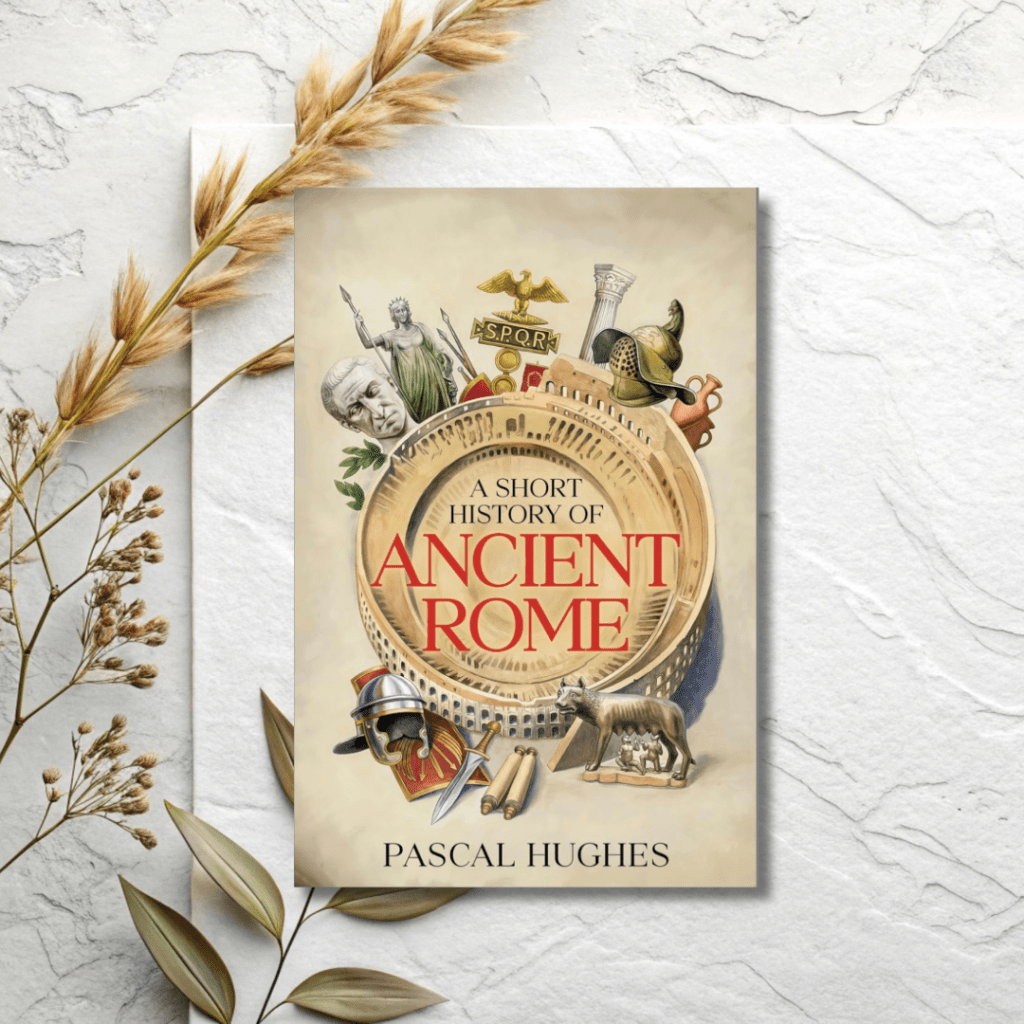
Book Review: A Short History of Ancient Rome by Pascal Hughes

⭐️ ⭐️ ⭐️ ⭐️ ⭐️/5

This site contains affiliate links to products. I may receive a commission for purchases made through these links at no additional cost to you.

If you’re a fan of the Short History Of… podcast from Noiser, you’re probably going to enjoy this book quite a bit. Full disclosure right up front: there is a fair amount of crossover between the podcast and the book, particularly in tone and some of the stories. If you’re a longtime listener, some moments will feel familiar, but it never felt repetitive in a way that bothered me. Instead, it felt like a more complete, more polished version of something I already enjoyed.

What Hughes manages to do here is no small thing. While Edward Gibbon’s The Decline and Fall of the Roman Empire famously stretches into the thousands of pages depending on the edition, Hughes distills roughly 1,000 years of Roman history — from its legendary beginnings to the fall of the Western Empire — into about 350 pages across 18 chapters. That kind of compression could easily feel rushed or shallow, but this book never does.

The writing is clear, confident, and very readable. Hughes blends solid historical research with anecdotal, narrative storytelling that keeps things moving without sacrificing substance. I’m a big fan of narrative history, and this book strikes a nice balance: it’s informative without being dense, and engaging without feeling like it’s oversimplifying the material. You can tell it’s written for curious readers, not academics, but it still respects the history.

Readers get the full sweep of Rome’s story, starting with the mythical founding of the city through Romulus and Remus, moving through the Republic, and into the drama, ambition, and excess of the Imperial period. Along the way, Hughes highlights familiar figures and moments — Hannibal crossing the Alps, Julius Caesar’s rise and fall, and all the intrigue surrounding Cleopatra — grounding big historical shifts in human stories. Even if Roman history isn’t something you’ve studied deeply, you’ll recognize plenty here and never feel lost.

One of the book’s biggest strengths is that it avoids feeling like a textbook. This isn’t one of those history books you were forced to read in school and promptly forgot. The pacing is strong, the chapters are manageable, and the storytelling keeps you engaged even when covering complex political or social changes. It’s the kind of history book that makes you want to keep reading rather than checking how many pages are left in the chapter.

I also listened to the audiobook version, which I highly recommend. The narration leans into the storytelling aspect, making it feel less like a lecture and more like someone walking you through the story of Rome. For a book like this — broad in scope but focused on narrative — the audio format works especially well.

Overall, A Short History of Ancient Rome is an accessible, engaging introduction to one of the most influential civilizations in history. It’s a great choice for readers who enjoy history told as a story, and especially for fans of the Short History Of… podcast who want a deeper, more sustained dive into ancient Rome.

Thank you so much to the author, Pascal Hughes, Netgalley and Harlequin Trade Publishing | Hanover Square Press for the ARC copy of this book.

A Short History of Ancient Rome by Pascal Hughes is out now! You can grab your copy here.
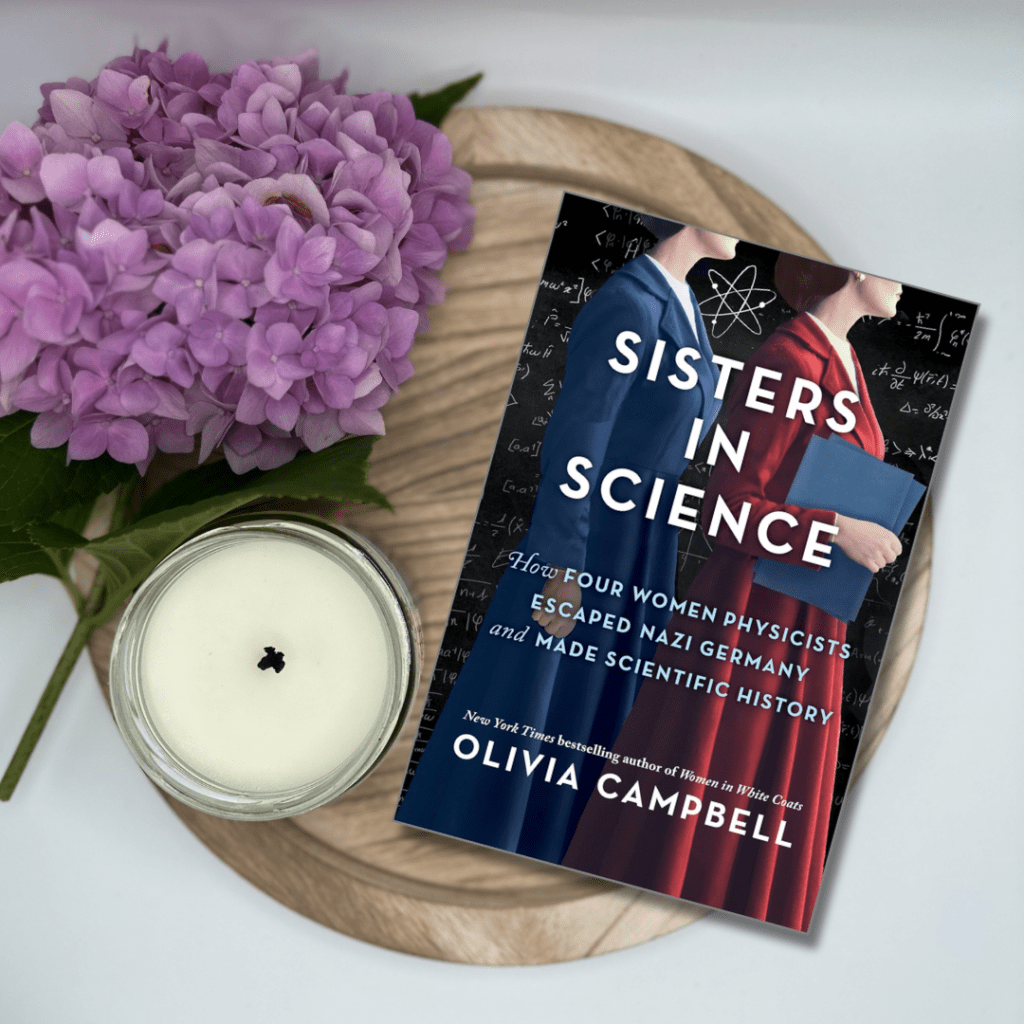
Book Review: Sisters in Science by Olivia Campbell

⭐️ ⭐️ ⭐️ ⭐️ ⭐️/5

This site contains affiliate links to products. I may receive a commission for purchases made through these links

Sisters in Science is an extraordinary narrative that sheds light on the lives of four remarkable women—Hedwig Kohn, Lise Meitner, Hertha Sponer, and Hildegard Stücklen—who defied the oppressive forces of Nazi Germany to leave a lasting impact on the world of science. Olivia Campbell offers a deeply researched and compelling account of their experiences, blending historical detail with a keen sense of storytelling.

This book takes readers into the tumultuous period of World War II, a time when the Nazi regime systematically persecuted individuals based on their religion, ethnicity, and political ideologies. For these four women—brilliant physicists and chemists—the stakes were particularly high. They faced not only the danger of persecution but also the erasure of their scientific contributions in a field dominated by men.

• Hedwig Kohn found refuge in Sweden, where she was able to continue her work in physics despite the challenges of exile.

• Lise Meitner, co-discoverer of nuclear fission, fled to Sweden and then to the United States, where her groundbreaking research would lay the foundation for future discoveries in atomic science.

• Hertha Sponer made her way to the United States and became one of the first female professors at Duke University, where her contributions to molecular physics broke barriers for women in academia.

• Hildegard Stücklen, though less known, played a vital role in advancing the fields of physical chemistry and spectroscopy during her exile.

What makes Sisters in Science truly stand out is its balance between detailed historical context and personal stories. Campbell doesn’t just focus on the challenges these women faced; she also celebrates their triumphs and enduring legacies. Their exile wasn’t just a flight for survival—it was a testament to their resilience and dedication to their work.

The book’s pacing is excellent, weaving historical events with the personal journeys of each scientist. Olivia Campbell’s meticulous research is evident in every chapter, but she manages to avoid making the narrative feel heavy or overly academic. Instead, readers are invited to feel the urgency, despair, hope, and triumph these women experienced as they rebuilt their lives and careers in foreign lands.

What resonates most is the sheer humanity of their stories. These women were not just scientists; they were pioneers who refused to let an oppressive regime dictate their destinies. Their determination to pursue truth and knowledge, even in the face of unimaginable odds, is deeply inspiring.

Campbell also brings attention to an important issue: the lack of recognition for women’s contributions in science. While these four women achieved remarkable feats, their names are often overshadowed by their male contemporaries. This book is a much-needed acknowledgment of their place in history and a reminder of how far we’ve come—and how far we still have to go—in achieving gender equality in STEM fields.

The writing is accessible yet rich in detail, making Sisters in Science an ideal read for both casual readers and those with a deep interest in history, science, or women’s studies. The inclusion of photographs, letters, and archival material adds another layer of authenticity and depth, helping readers connect with the women on a more personal level.

I cannot recommend Sisters in Science highly enough. It is a powerful and inspiring reminder of the strength of the human spirit and the vital role of women in shaping our understanding of the world. Whether you’re a history enthusiast, a science lover, or someone simply looking for an inspiring read, this book will leave you enriched and in awe of the incredible resilience and brilliance of these women.

A special thank you to Olivia Campbell, NetGalley, and Harlequin Trade Publishing for the opportunity to read this incredible book. It’s a work that will stay with me for a long time.

On sale now, you can get your copy here.

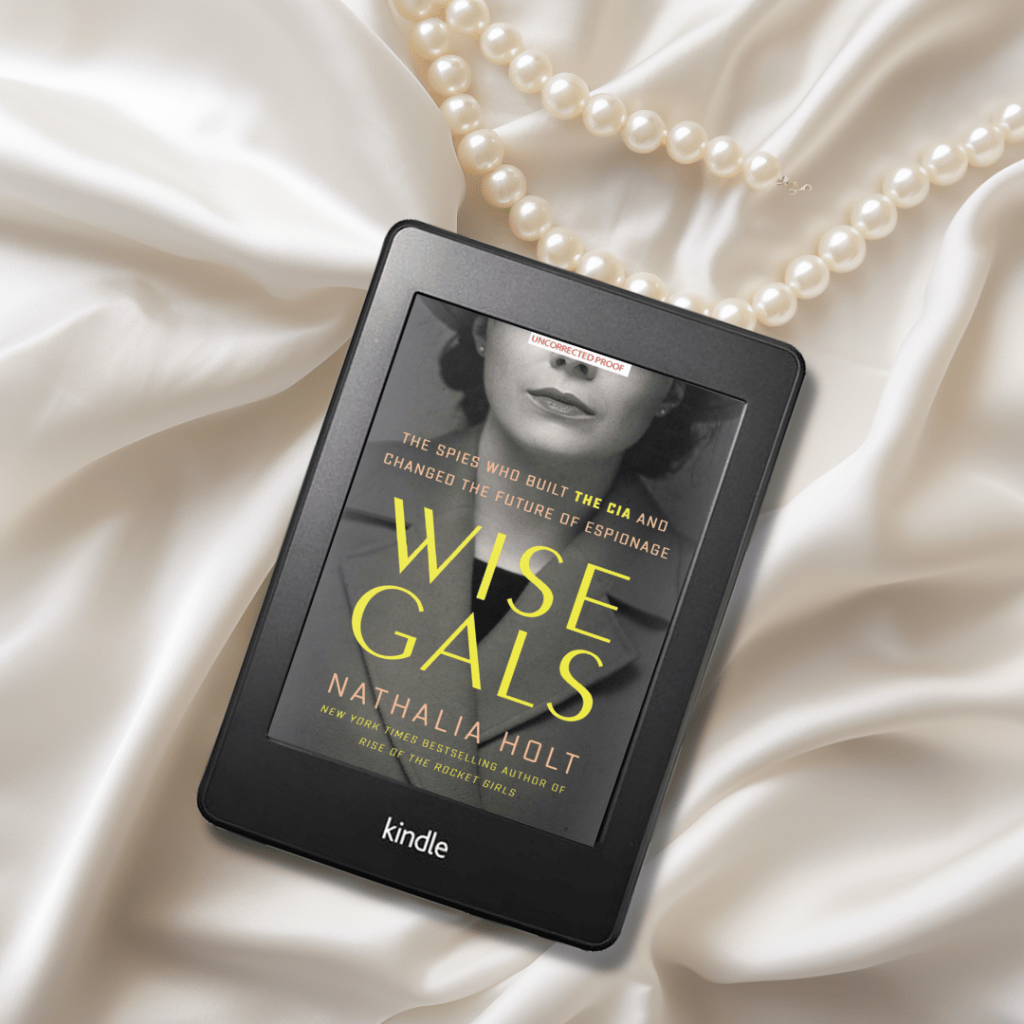
Wise Gals By Nathalia Holt

⭐️ ⭐️ ⭐️ ⭐️ ⭐️/5

This site contains affiliate links to products. I may receive a commission for purchases made through these links

Nathalia Holt, a New York Times bestselling author renowned for uncovering untold stories, delivers another gem with Wise Gals: The Spies Who Built the CIA and Changed the Future of Espionage. Diving into the hidden history of the CIA’s early days, the book introduces readers to four extraordinary women—Adelaide Hawkins, Mary Hutchison, Eloise Page, and Elizabeth Sudmeier—who defied societal norms to play pivotal roles in the Agency’s formation and operations.

These aren’t your average femme fatales from spy novels or the stereotypical honey traps that normally come to mind when you think about female spies. No, these women are intellectual powerhouses with nerves of steel. Their remarkable stories span from World War II through the Cold War era, touching on ongoing international crises. In what was described as a “male, pale, and Yale” dominated workspace, Adelaide’s cryptographic genius, Mary’s diplomatic skills, Elizabeth’s daring field intelligence, and Eloise’s groundbreaking scientific contributions all shine through.

What sets this book apart is Holt’s meticulous research, evident on every page. Drawing from first-hand interviews and declassified documents, Holt doesn’t give readers a James Bond-esque narrative but instead offers a grounded account of these women’s determination and significant contributions. This includes crucial roles in predicting the Soviet Union’s early development of atomic capabilities and intelligence gathering that contributed to the Cuban missile crisis.

However, the book doesn’t shy away from the grim realities these extraordinary women faced, particularly their battles for equal pay and recognition in a notoriously misogynistic environment. A poignant example is Jane Burrell, another key figure who has yet to receive a star on the CIA’s Memorial Wall—an oversight that Holt brings into focus.

Wise Gals serves as a significant addition to both historical non-fiction and discussions about the challenges and triumphs of women in the workforce. Reading it leaves you with a complicated mix of pride for these women’s achievements and frustration at the societal barriers they had to fight. It’s a fight many continue to this day. While the book may not offer high-octane thrills, it provides a long-overdue homage to these unsung heroines of American history. Whether you’re interested in untold stories of women instrumental to our country’s security or simply a well-crafted narrative, this book is an excellent read.

A huge thank you to the author Nathalia Holt not only for an advanced copy of this book, but for shedding light on these crucial but long-overlooked narratives. And thank you to the publisher Penguin and NetGalley for the ARC copy of this book.

As always, I encourage you to read this one for yourself and formulate your own opinion.

On sale now, you can get your copy by clicking Here

Sian Evans: Maiden Voyages

Please note that this post may contain affiliate links, which are no cost to you but do give me a small payout if you choose to purchase via the link on the page.

Rating: 4 out of 5.

The Rundown: An indepth look at the history of ocean travel as told through the stories of the women who went to sea.

Written by Sian Evans, Published 2021

I have always been enamored with history, so I’m always looking for a good historical book that isn’t too dry. Sian Evans does a wonderful job of taking us on a journey through history via the monumental innovation of transatlantic cruising.

We begin in the roaring ’20s and move through the first world war, the depression that followed, the second world war, the aftermath, and finally the death of crossing the Atlantic due to the advancement of air travel. Women were not historically welcome on ships, but at the end of WWII, there was a shortage of men in Great Britain, where many of the women in this book hail from. Not to mention that many women were galvanized into the workforce when their husbands, brothers, and fathers went to war. Many were reluctant to give up the freedom they had achieved by earning a paycheck. And when the sea called, they answered.

We meet the “unskinable” Violet Jessop, who was a stewardess on the Olympic, Titanic, and Britannic when they were damaged. The Olympic struck another ship, no fatalities, the Titanic, an iceberg (and we all know what happened there, ) and the Britannic when it was acting as a hospital ship and was sunk with 30 fatalities. Her stories are featured prominently through the book, as she published a memoir.

While Jessop was up working mostly with the first and second-class passengers, we also hear the story of Maria Riffelberger, who worked down in steerage with the 3rd class passengers, helping usher them into their new lives as American citizens. Many times she accompanied minors making the perilous journey across the vast ocean.

We also meet many women of leisure, refugees of the 2nd world war, political figures, and even the story of an Irish immigrant seeking a new life in America, whose son soars to the top of American politics.

All in all, I found this a very enjoyable, informative, and easy listen. It felt almost like I was taking a guided tour through the golden age of ocean travel. Evans was able to tell a story while keeping the reader engaged on what could be a dull topic. Her knack for storytelling while being descriptive and informative is much appreciated. A big thanks to the author, NetGalley and Macmillan Audio for providing a copy for my review.

This audiobook was provided by NetGalley and Macmillan Audio free in exchange for my review.